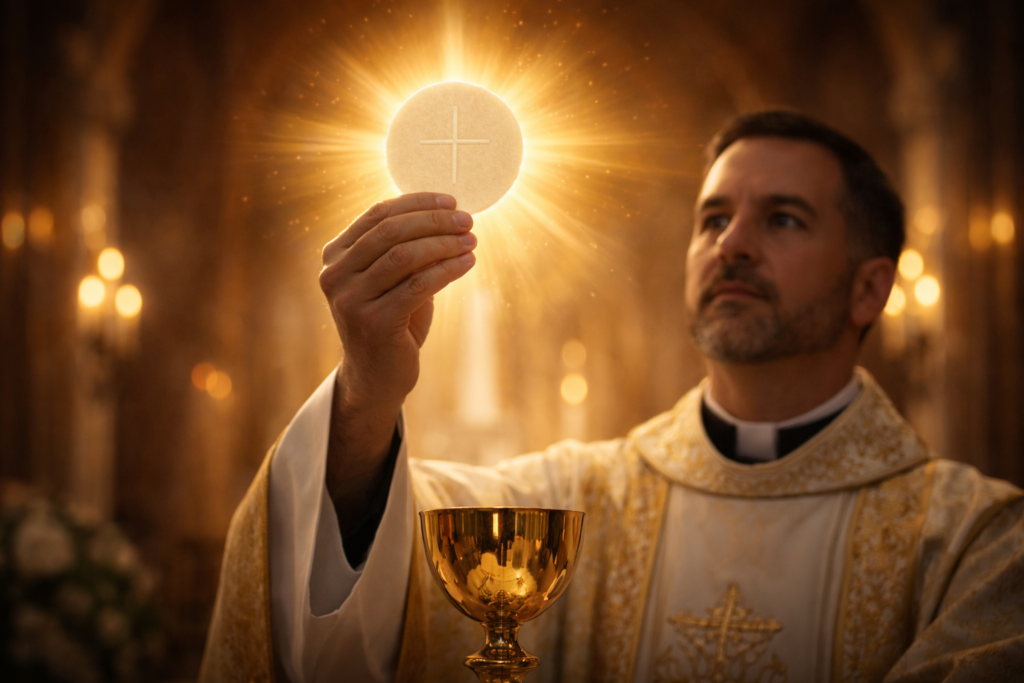
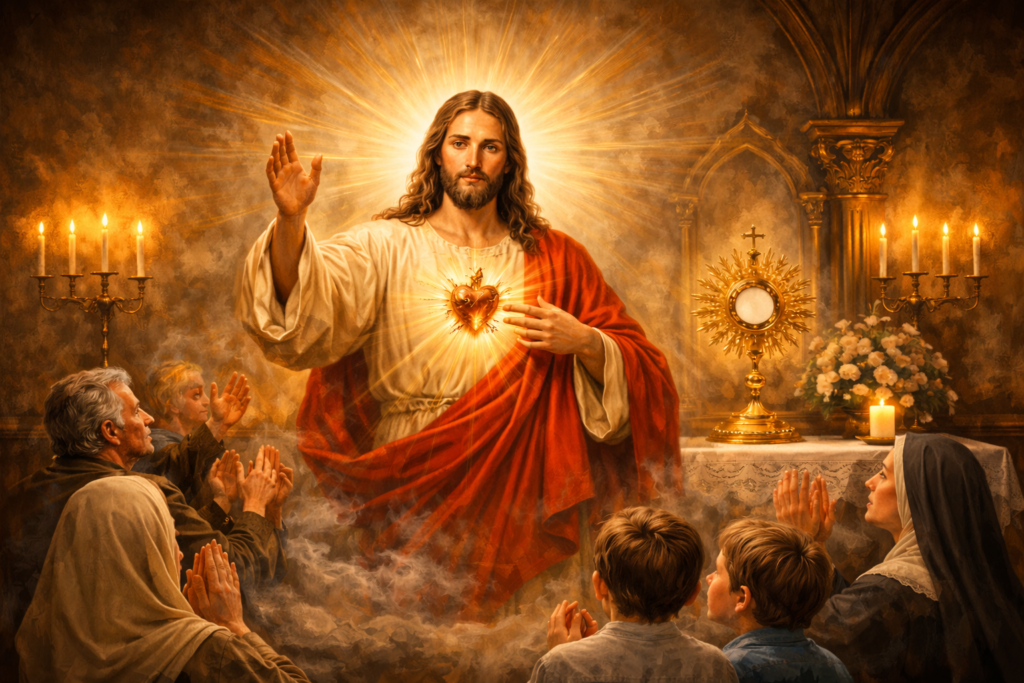
Why Catholics Believe in the Real Presence
Catholics believe in the Real Presence in Eucharist, meaning Jesus is truly present — Body, Blood, Soul and Divinity.
Introduction
The Holy Eucharist is at the heart of Catholic faith. Catholics believe that in the Eucharist, Jesus is truly present — not symbolically, but really and substantially (Catechism of the Catholic Church [CCC] 1374).
This belief is not a later invention. It is rooted in Sacred Scripture and faithfully preserved in Apostolic Tradition.
What is the Real Presence in the Eucharist?
The Real Presence means that Jesus Christ becomes truly present — Body, Blood, Soul, and Divinity — in the Holy Eucharist (CCC 1374).
This is not merely a reminder of Christ.
It is Christ Himself.
The Church teaches that in the Eucharist, “the whole Christ is truly, really, and substantially contained” (CCC 1374).
Biblical Foundation
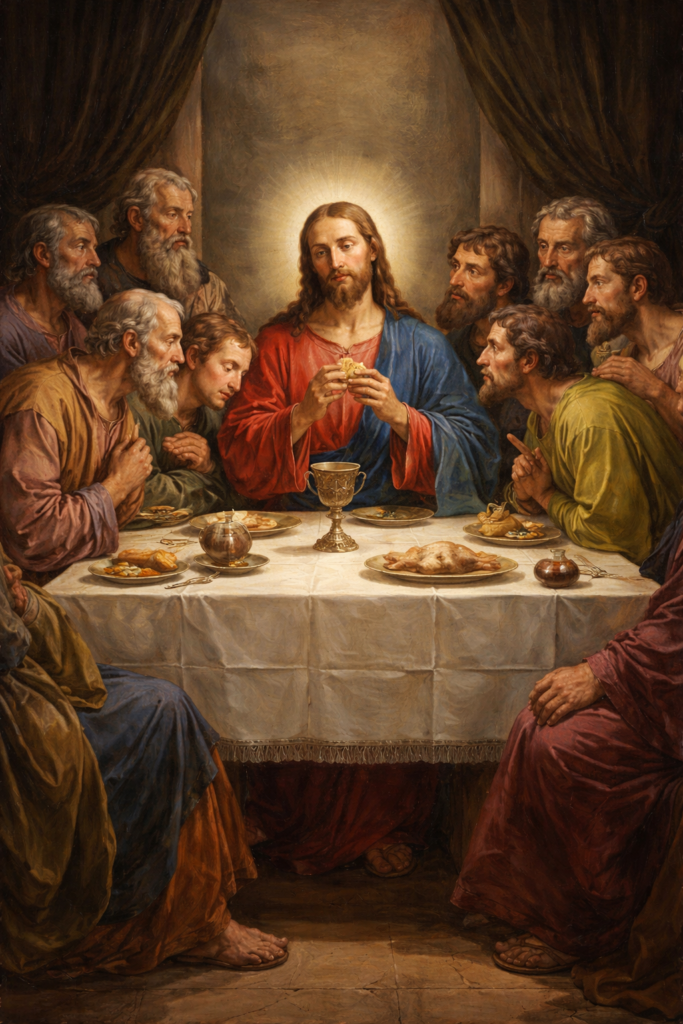
At the Last Supper, Jesus said:
“This is my Body… This is my Blood.”
— Matthew 26:26–28; Mark 14:22–24; Luke 22:19–20 (RSV-CE).
He did not say, “This represents my Body.”
He gave Himself.
Saint Paul also affirms this teaching:
“Whoever eats the bread or drinks the cup of the Lord unworthily will be guilty of profaning the Body and Blood of the Lord.”
— 1 Corinthians 11:27 (RSV-CE).
In John 6, Jesus taught:
“My flesh is true food, and my blood is true drink.”
— John 6:55 (RSV-CE).
“Many disciples found this difficult and left Him”
— John 6:66 (RSV-CE).
Yet Jesus did not soften His teaching. Instead, He allowed them to walk away, affirming the seriousness of His words.
The Catechism of the Catholic Church explains this teaching clearly.
Church Teaching on the Real Presence in Eucharist
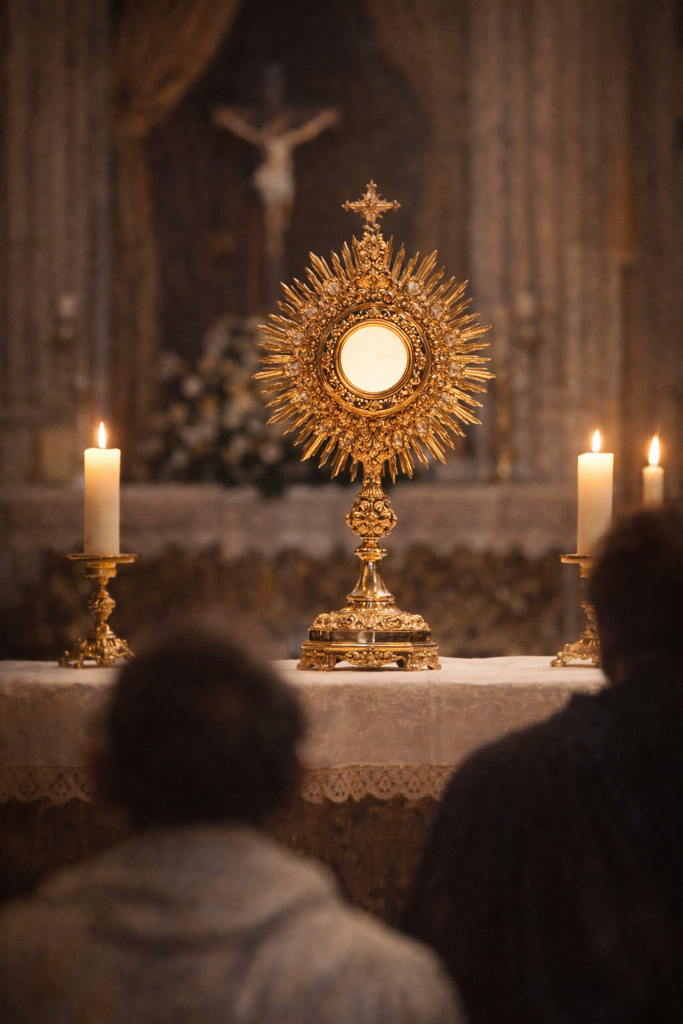
From the earliest Christians until today, the Church has always believed in the Real Presence.
The Catechism explains:
“By the consecration of the bread and wine there takes place a change of the whole substance of the bread into the substance of the Body of Christ our Lord and of the whole substance of the wine into the substance of His Blood.”
(CCC 1376)
This transformation is called:
Transubstantiation (CCC 1376).
Through the Eucharist, bread and wine are transformed into Christ Himself.
This teaching was solemnly affirmed by the Council of Trent (Session XIII).
Why It Matters
If Christ is truly present in the Eucharist, then the Mass is not merely a ritual.
It becomes:
- Encounter
- Communion
- Union with Christ
The Eucharist nourishes the soul and deepens our participation in Christ’s sacrifice (CCC 1324).
As the Catechism states:
“The Eucharist is the source and summit of the Christian life.”
(CCC 1324)
Reflection
Belief in the Real Presence invites us to approach the Eucharist with reverence, devotion, and love.
For Catholics, the Eucharist is not only a gift —
It is Jesus Himself.
The Eucharist strengthens believers as they await the return of Christ. This hope is explained in our article “Are We Living in the End Times?”
Sources and References
Sacred Scripture:
- Matthew 26:26–28 (RSV-CE).
- Mark 14:22–24 (RSV-CE).
- Luke 22:19–20 (RSV-CE).
- John 6:51–58 (RSV-CE).
- 1 Corinthians 11:23–29 (RSV-CE).
Catechism of the Catholic Church:
- Catechism of the Catholic Church, §§1324, 1374–1377.
Council of Trent:
- Session XIII (Decree on the Most Holy Eucharist)
Explore more Faith Teaching here.
This teaching is part of our Faith Teaching reflections.
This transformation is explained by the Church through the teaching of Transubstantiation.