St. Joseph the Worker: Faith, Dignity, and the Meaning of Labor (May 1)
Introduction
St Joseph the Worker May 1 is celebrated every year by the Catholic Church as a feast that honors the dignity of human labor through the silent and faithful life of the earthly father of Jesus.
This day also coincides with Labor Day (International Workers’ Day), giving the Church a powerful opportunity to present a Christian vision of work—not merely as survival, but as participation in God’s creation.
Instituted by Pope Pius XII in 1955, this feast places Christ at the center of human work and restores its spiritual meaning.
St. Joseph: A Model Worker
Though Scripture speaks little about Joseph, what it reveals is profound.
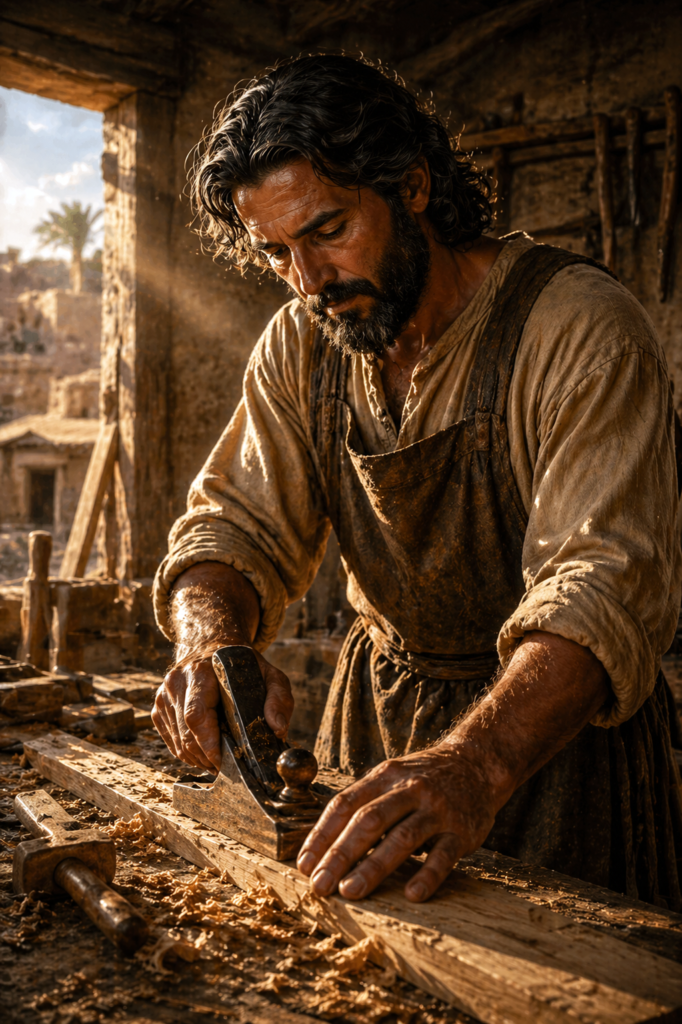
“Is not this the carpenter, the son of Mary…?”
— Gospel of Mark 6:3 (RSV-CE)
Joseph was not a king, scholar, or public preacher—but a worker. Through his hands, he provided for the Jesus Christ and Virgin Mary, forming the Holy Family through ordinary labor.

What Joseph Teaches Us
- Work is holy when done with love and obedience to God
- Daily duties can become acts of worship
- Silent faithfulness is greater than worldly recognition
The Dignity of Work (CCC)
The Church teaches that work is not a punishment—it is part of God’s original plan.
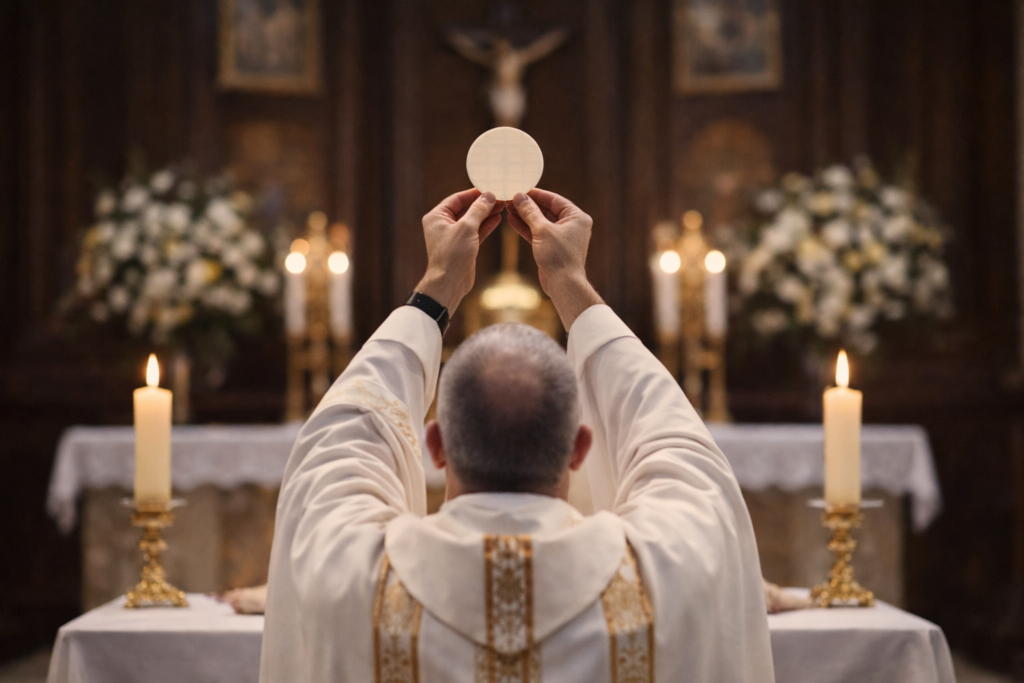
Our daily work finds its deepest meaning when united with Christ, especially through the Eucharist, where we encounter the Real Presence of Jesus Christ.
This mystery becomes real through Transubstantiation, where bread and wine truly become the Body and Blood of Christ.
“Human work proceeds directly from persons created in the image of God…”
— Catechism of the Catholic Church 2427
“Work honors the Creator’s gifts…”
— CCC 2428
The feast of St Joseph the Worker May 1 reminds us that all human work has dignity when united with God’s purpose.
Key Teachings from CCC
- Work is a participation in God’s creative action
- It is a path to sanctification
- It promotes the common good
- Workers deserve justice and dignity
Scripture on Work (RSV-CE)
The Bible consistently affirms the value of honest labor:
“Whatever your task, work heartily, as serving the Lord…”
— Letter to the Colossians 3:23 (RSV-CE)
“If any one will not work, let him not eat.”
— Second Letter to the Thessalonians 3:10 (RSV-CE)
“Let the thief no longer steal, but rather let him labor…”
— Letter to the Ephesians 4:28 (RSV-CE)
These verses show that work is tied to responsibility, dignity, and service.
Catholic Social Teaching & Labor
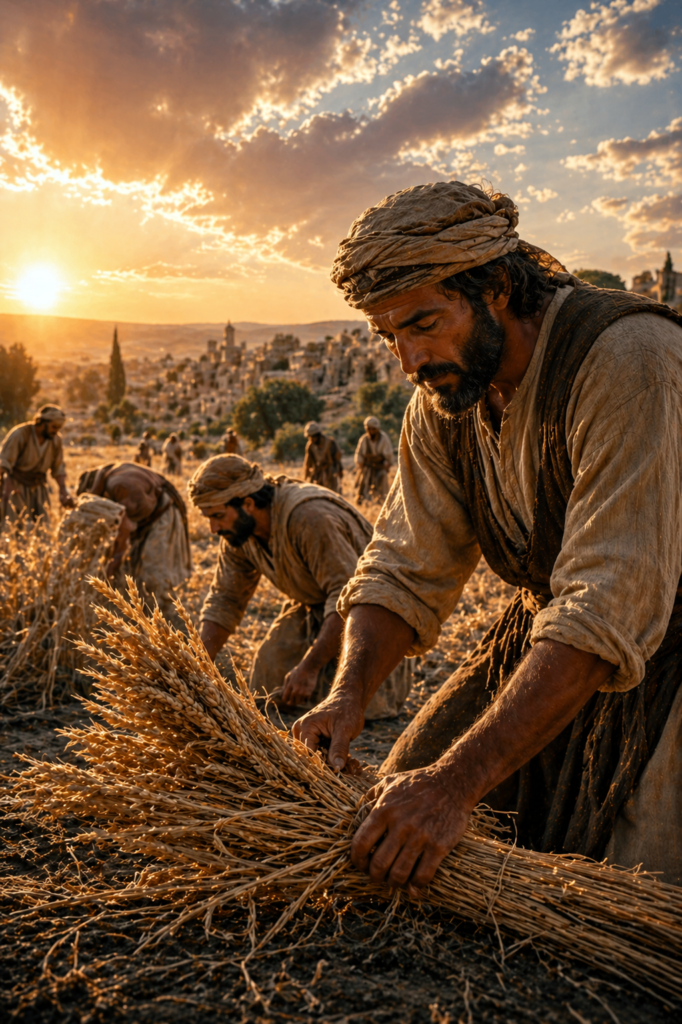
The Church strongly defends workers’ rights and dignity.
A key foundation is Rerum Novarum, which addresses:
- Fair wages
- Safe working conditions
- Workers’ rights
Later teachings, including those found on Vatican resources, continue to affirm:
- Work must serve the human person, not enslave them
- Economic systems must respect human dignity
Canon Law Perspective
While the Code of Canon Law does not speak extensively about labor in economic terms, it emphasizes:
- The duty of the faithful to live responsibly in society (Canon 222)
- Supporting the mission of the Church through work and resources
Work is therefore connected to moral responsibility and stewardship.
Why St Joseph the Worker May 1 Matters Today
In today’s world:
- Many struggle with unemployment
- Some face exploitation
- Others feel purposeless in their work
St. Joseph reminds us:
- Your work has eternal value
- God is present in your daily effort
- Even hidden work can build God’s Kingdom

Living This Feast
Here are simple ways to observe May 1:
- Offer your daily work to God in prayer
- Ask St. Joseph for guidance in your profession
- Treat workers around you with respect and justice
- Reflect on how your work serves others
Throughout history, God has strengthened our faith through Eucharistic Miracles, visible signs that confirm His true presence among us.
Work as a Path to Holiness
St Joseph the Worker May 1 reminds us that work is not only a duty but also a path to holiness. In every task—whether small or great—we are invited to offer our efforts to God.
When work is done with love, honesty, and dedication, it becomes a form of prayer. Even the most hidden or unnoticed labor has spiritual value when united with Christ.
In a world that often measures success by wealth or recognition, St. Joseph teaches us a different path—the path of faithfulness in daily responsibilities. Through simple work, he participated in God’s plan of salvation, showing us that holiness is found not in extraordinary actions, but in ordinary life lived with God.
Prayer to St. Joseph the Worker
O St. Joseph, faithful worker and protector, guide us in our daily labor. Help us to work with honesty, patience, and love. Teach us to offer every effort to God and to trust in His providence. May our work glorify Him and serve others. Amen.
FAQ (Frequently Asked Questions)
1. Why is St. Joseph celebrated on May 1?
To honor him as a model worker and to highlight the dignity of human labor.
2. What does the Catholic Church teach about work?
Work is a participation in God’s creation and a path to holiness (CCC 2427–2428).
3. Is Labor Day connected to the Church?
Yes—through St. Joseph the Worker, the Church gives spiritual meaning to labor.
4. What Bible verse is best for work?
Colossians 3:23—“Work heartily, as serving the Lord.”
5. How can I sanctify my daily work?
By offering it to God, doing it with love, and serving others through it.
Closing Reflection
St. Joseph did not perform miracles or preach sermons—yet he shaped salvation history through faithful work.
On this May 1, let us rediscover that:
Your work matters. Your effort is seen. And in God, nothing is wasted.
St Joseph the Worker May 1 invites every believer to rediscover the spiritual value of daily work.
Explore more teachings and grow deeper in faith through Way2Eucharist.
Sources & Resources
- Catechism of the Catholic Church (2427–2428)
- Holy Bible RSV-CE
- Code of Canon Law (Canon 222)
- Rerum Novarum
- Vatican (www.vatican.va)