Ash Wednesday: A Sacred Beginning of Return to God
Ash Wednesday meaning marks the beginning of the sacred season of Lent — a forty-day spiritual journey of repentance, renewal, and deeper union with God.
For Christians around the world, this day is not simply a ritual. It is a powerful invitation from God to return to Him with humility, sincerity, and hope.
Ash Wednesday reminds us that life on earth is temporary, but our relationship with God is eternal.
What Happens on Ash Wednesday?
On Ash Wednesday, the faithful receive ashes on their foreheads in the shape of a cross during a liturgical service.
The ashes are traditionally made from the blessed palm branches from the previous year’s Palm Sunday.
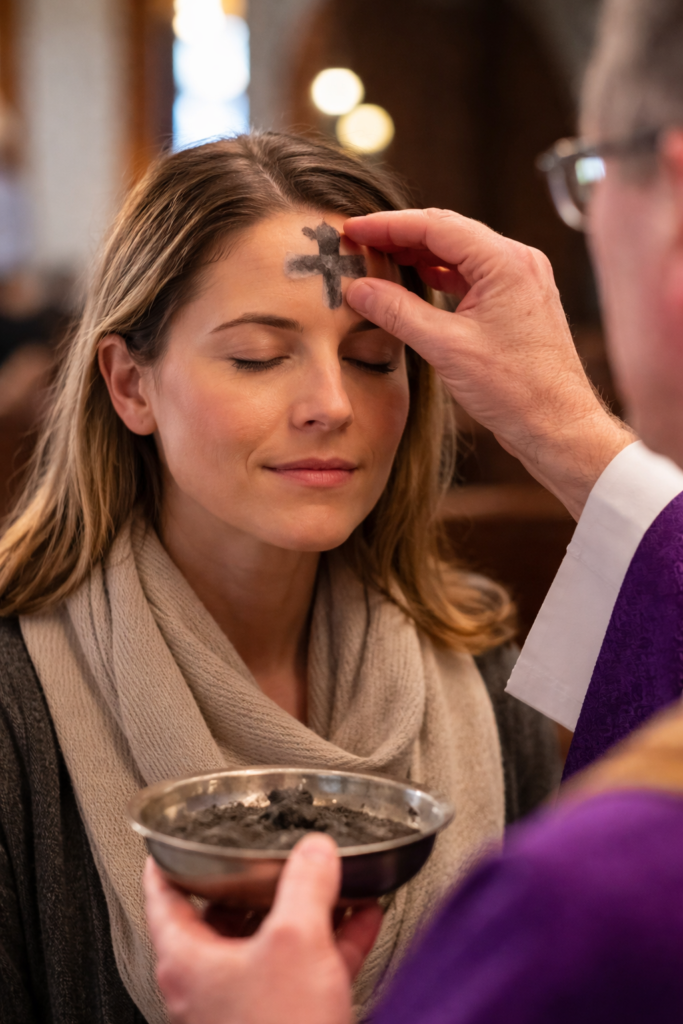
As the priest places the ashes, one of these words is spoken:
“Remember that you are dust, and to dust you shall return.”
— Genesis 3:19 (RSV-CE)
or
“Repent, and believe in the Gospel.”
— Mark 1:15 (RSV-CE)
These words proclaim two profound spiritual truths:
- Human life is fragile and temporary
- The soul is eternal and created for God
Ash Wednesday therefore calls believers to shift their focus from worldly concerns to eternal life.
The Meaning of Ashes
In Sacred Scripture, ashes symbolize repentance, humility, and conversion of heart.
Throughout the Bible, people used ashes as a visible sign of sorrow for sin and their desire to return to God.

For example:
“I repent in dust and ashes.”
— Job 42:6 (RSV-CE)
Receiving ashes today expresses a similar interior attitude:
- Acknowledging our weakness before God
- Turning away from sin
- Seeking divine mercy
- Desiring inner transformation
The Church teaches that the ashes are not about outward appearance but about inward conversion.
As the prophet Joel calls us:
“Return to me with all your heart, with fasting, with weeping, and with mourning;
rend your hearts and not your garments.”
— Joel 2:12-13 (RSV-CE)
The Three Pillars of Lent
Ash Wednesday opens the journey of Lent, which is traditionally built upon three spiritual practices.
1. Prayer
Fasting disciplines the body and helps detach the heart from worldly distractions.
2. Fasting
To discipline the body and purify the soul.
3. Almsgiving
Almsgiving grows charity and reminds us to care for the poor and those in need.
Jesus Himself teaches about these practices in the Gospel:
“And when you fast, do not look dismal, like the hypocrites… but anoint your head and wash your face.”
— Matthew 6:16-18 (RSV-CE)
These three pillars guide the faithful toward spiritual renewal throughout Lent.
🌿 Understanding the Season of Lent
Ash Wednesday begins the forty-day journey toward Easter — a time when the Church prepares to celebrate the Passion, Death, and Resurrection of Jesus Christ.
Lent invites believers to:
- examine their conscience
- seek repentance
- renew their faith
- grow in holiness
To explore the deeper meaning of this sacred season, read:
➡️ Lent Meaning: A Journey of Return and Renewal
A Call to Interior Change
Ash Wednesday is not meant to be a day of sadness. Instead, it is a moment of grace and hope.
God calls every believer back to Himself.
Through repentance, God heals the soul and restores our relationship with Him.
As Scripture reminds us:
“Return to the Lord your God, for he is gracious and merciful, slow to anger, and abounding in steadfast love.”
— Joel 2:13 (RSV-CE)
Lent becomes a journey of spiritual healing that leads us toward Easter.
A Eucharistic Perspective
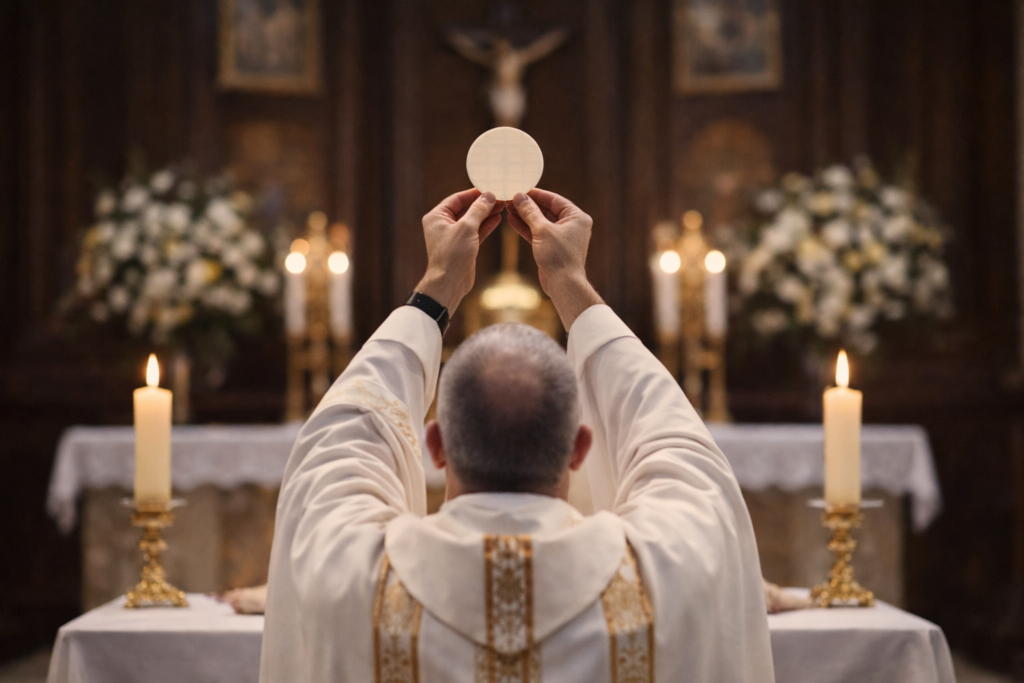
For believers in the Real Presence of Jesus Christ in the Holy Eucharist, Ash Wednesday prepares the heart for a deeper encounter with Christ.
Sin weakens our communion with God.
Distractions dull our awareness of His presence.
Routine can diminish reverence.
Lent invites us to renew our Eucharistic life through:
- examination of conscience
- sacramental confession
- spiritual discipline
- deeper reverence for the Holy Eucharist
Jesus reminds us:
“I am the bread of life; he who comes to me shall not hunger.”
— John 6:35 (RSV-CE)
Through repentance and grace, the believer journeys from ashes to the altar — from weakness to communion with Christ.
From Ashes to the Altar
The journey of Lent moves the soul step by step toward renewal.
From ashes… to repentance.
From repentance… to reconciliation.
From reconciliation… to communion.
Through this sacred journey, believers are drawn closer to Christ and prepared to celebrate the joy of Easter.
A Call for This Lent
This Lent is an invitation to renew your heart and return to Christ more deeply.
Prepare your soul to receive the Lord worthily in the Holy Eucharist.
Let this season not remain external or routine. Allow it to become a time of true spiritual renewal and Eucharistic devotion.
Turn away from sin.
Seek reconciliation through Confession.
Return to Christ with humility.
Return. Repent. Receive.
To deepen your understanding of the Catholic faith and Eucharistic devotion, explore our Faith Teaching page and spiritual reflections.
Conclusion
Ash Wednesday stands as the doorway to spiritual transformation.
It reminds us:
We are dust — yet deeply loved by God.
We are weak — yet called to holiness.
We are sinners — yet invited into grace.
Lent invites us not merely to observe a season, but to live a true conversion of heart.
Let this Lent become a journey of repentance, renewal, and Eucharistic devotion.
Return to the Lord with all your heart.
Sources & Resources
For further understanding of Ash Wednesday and Lent, explore these Catholic resources:
- Catechism of the Catholic Church
- CCC 1430–1439 — Interior repentance
- CCC 540 — Jesus’ forty days of fasting in the desert
- Sacred Scripture (RSV-CE)
- Genesis 3:19
- Joel 2:12-13
- Matthew 6:1-18
- Mark 1:15
- John 6:35
- Official Church Resources
- Roman Missal — Ash Wednesday Liturgy
- Vatican: General Audience teachings on Lent