Why Eucharistic Adoration Matters
Introduction
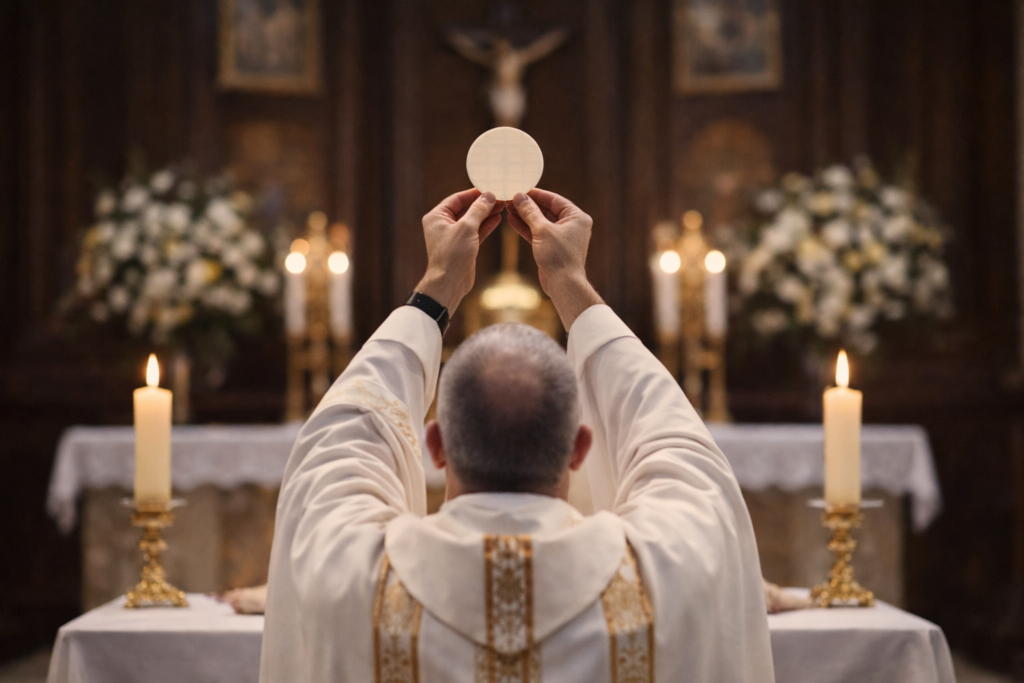
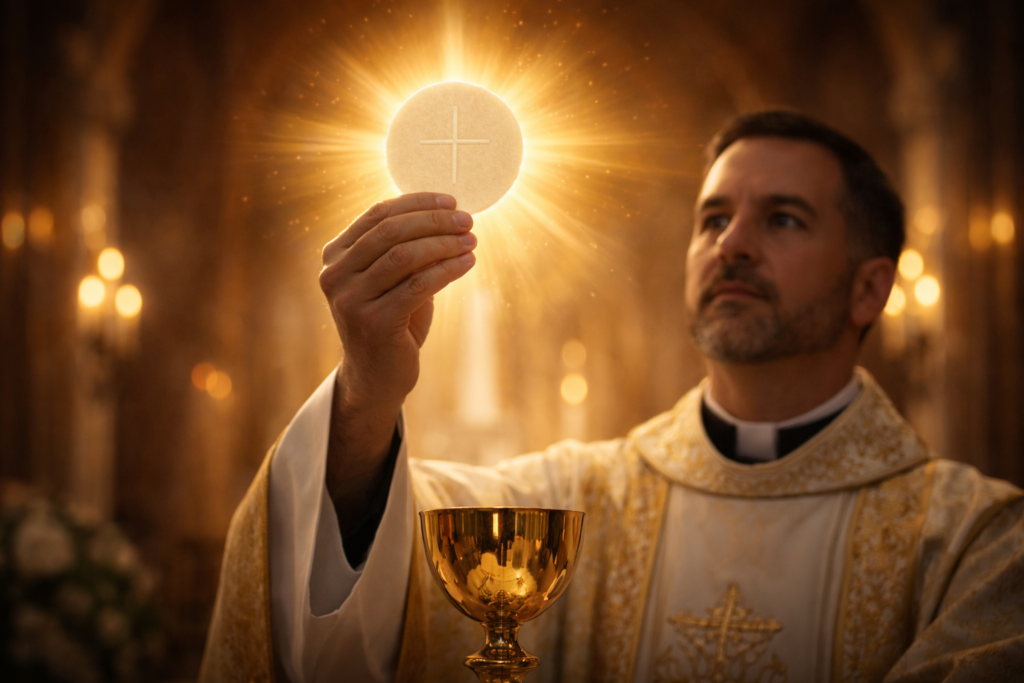
Eucharistic Adoration is a sacred practice where believers spend time in prayer before the Blessed Sacrament.
During Adoration, the consecrated host is placed in a monstrance or kept in the tabernacle, and the faithful gather in silence and prayer before Jesus Christ truly present in the Eucharist.
This devotion flows from the Catholic belief that Christ is truly present in the Eucharist — Body, Blood, Soul, and Divinity.
Because of this belief, Eucharistic Adoration is not simply a devotional practice but an encounter with the living Christ.
Meaning of Adoration
Adoration means honoring God with love, reverence, and worship.
When Catholics adore the Eucharist, they are not praying to a symbol or remembering a distant event. Instead, they are worshiping Jesus Himself who is truly present in the Blessed Sacrament.
Adoration expresses the Church’s deep reverence for the Eucharist, which is the greatest gift Christ left to His Church.
Biblical Foundation
In the Gospels, people came before Jesus to worship Him.
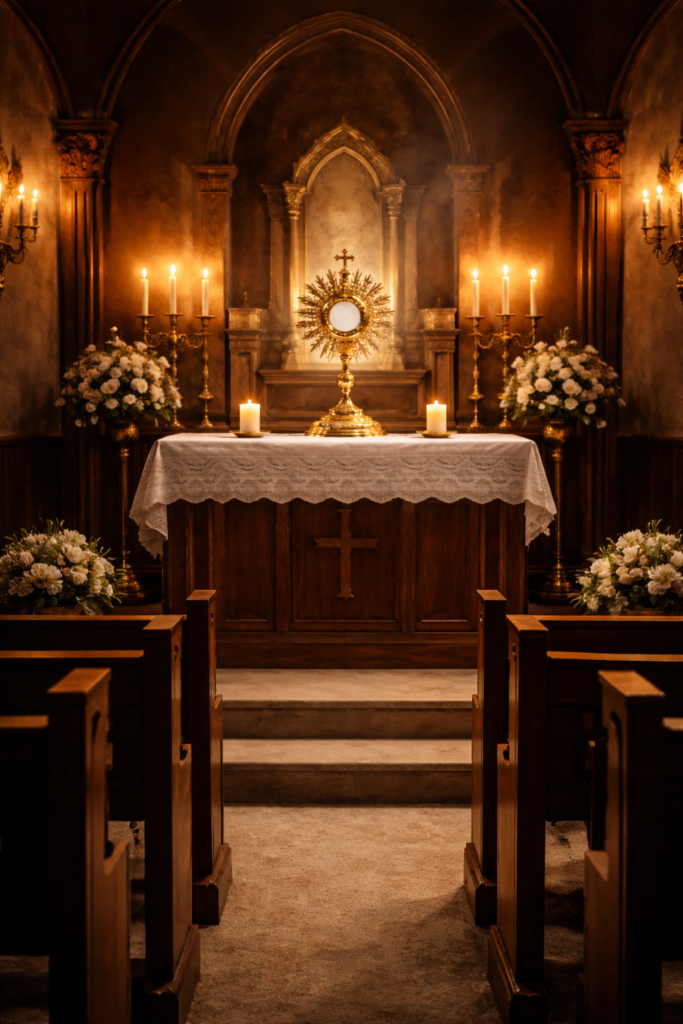
The roots of Eucharistic Adoration can be seen throughout the Gospels, where people came before Jesus with reverence and worship.
“And behold, Jesus met them and said, ‘Hail!’ And they came up and took hold of his feet and worshiped him.”
Matthew 28:9 (RSV-CE)
After the Resurrection, the disciples recognized Jesus in the breaking of the bread.
“He was known to them in the breaking of the bread.”
Luke 24:35 (RSV-CE)
These moments reveal the reverence given to Christ by His followers. Today, Eucharistic Adoration continues that same act of worship before Christ present in the Eucharist.
Connection to the Real Presence
Eucharistic Adoration is possible because of the Catholic teaching of the Real Presence.
Through the mystery of Transubstantiation, the bread and wine at Mass truly become the Body and Blood of Christ. Although the outward appearance of bread and wine remains, their substance is completely changed.
Because Christ is truly present, the Church encourages the faithful to adore Him in the Eucharist.
The Catechism of the Catholic Church teaches that Christ is present in the Eucharist in a unique and substantial way.
Catechism of the Catholic Church (CCC 1374)
The Eucharist as the Center of Christian Life
The Eucharist holds a central place in the life of the Church. Because Christ is truly present in the Eucharist, the Church encourages the faithful not only to receive Holy Communion but also to spend time in prayer before the Blessed Sacrament.
The Catechism teaches that the Eucharist is the heart of the Church’s life and worship.
“The Eucharist is the source and summit of the Christian life.”
Catechism of the Catholic Church (CCC 1324)
For this reason, Eucharistic Adoration allows believers to remain close to Christ and to grow in deeper communion with Him.
Spiritual Importance
Spending time in Eucharistic Adoration offers many spiritual benefits.
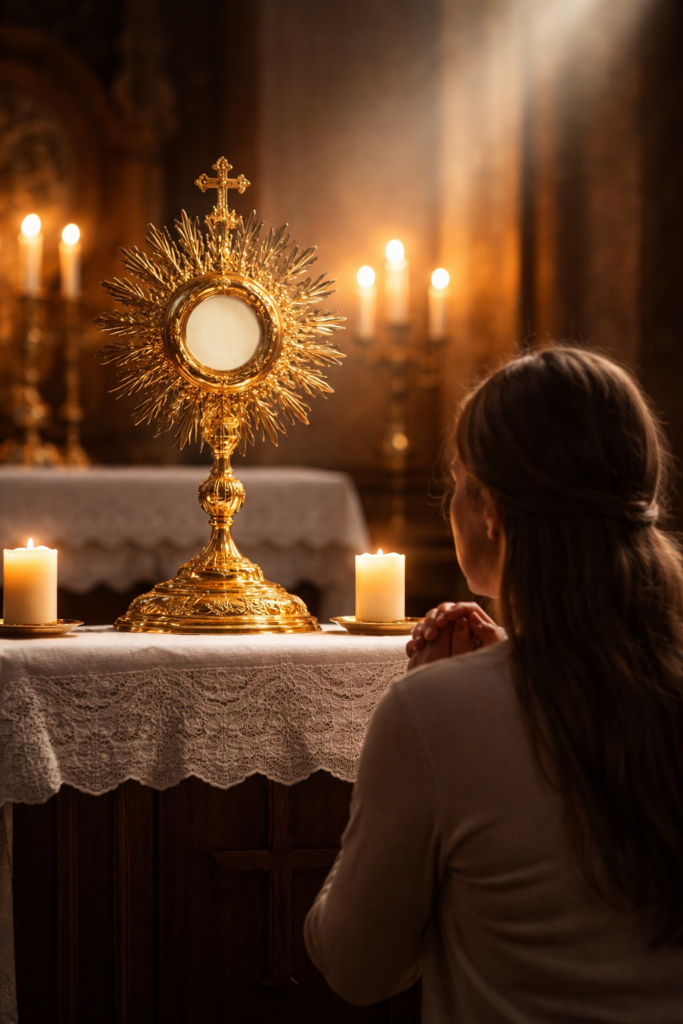
Moments of quiet prayer before the Blessed Sacrament allow believers to rest in the presence of Christ and open their hearts to Him.
Through Adoration:
• Faith becomes deeper
• Hearts find peace
• Love for Christ grows stronger
• Prayer becomes more personal
Many saints have spoken about the importance of spending time before the Eucharist, describing it as a powerful source of spiritual strength.
The Catechism of the Catholic Church encourages Eucharistic devotion.
Reflection
Eucharistic Adoration invites believers into silence, prayer, and intimacy with Jesus.
In a world filled with noise and distractions, Adoration offers a sacred space where the faithful can simply remain in the presence of Christ.
This devotion helps believers grow in love for the Eucharist and strengthens their relationship with Jesus.
For many Catholics, time spent in Eucharistic Adoration becomes a moment of grace, renewal, and deep spiritual encounter.
You may also explore our Recommended Catholic Resources page for trusted prayer books and devotional items.
Sources and References
The Holy Bible (RSV-CE)
Matthew 28:9; Luke 24:35
Catechism of the Catholic Church (CCC 1324, 1374)
Ecclesia de Eucharistia 25 — St. John Paul II