Are We Living in the End Times?
A Catholic Understanding of the Signs of the Times
In every generation, Christians have looked at world events—wars, disasters, moral confusion, and global uncertainty—and asked the same question:
“Are we living in the end times?”
Today, many people are asking this again. News about wars, political tensions, economic instability, and natural disasters makes some wonder whether the end of the world is near.
But what does the Church actually teach about the end times?
Let us look at Scripture and the teaching of the Church.
Jesus Warned About Wars and Troubles
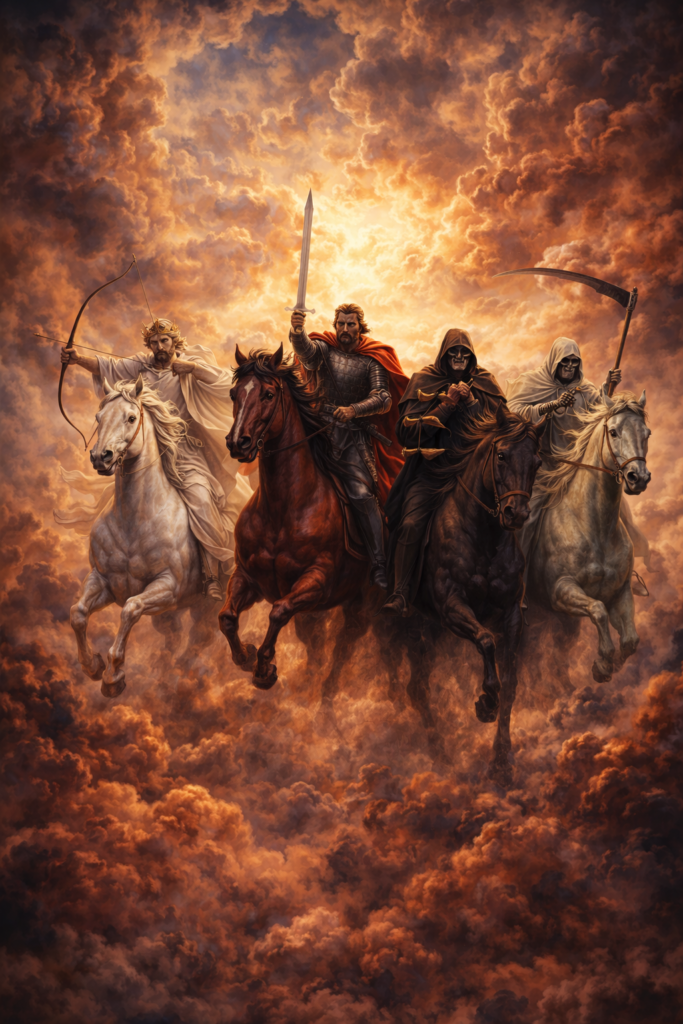
In the Gospel of Matthew, Jesus spoke about difficult events that would occur in the world.
“And you will hear of wars and rumors of wars; see that you are not alarmed; for this must take place, but the end is not yet.”
— Matthew 24:6 (RSV-CE)
Jesus explained that throughout history there will be:
- wars and conflicts
- earthquakes and natural disasters
- persecution of believers
- moral confusion in society
These events are real, but Jesus said they are not proof that the end has arrived.
He described them as the “beginning of birth pains.”
No One Knows the Day or Hour
Jesus made it very clear that no one knows the exact time of the end.
“But of that day and hour no one knows, not even the angels of heaven, nor the Son, but the Father only.”
— Matthew 24:36 (RSV-CE)
Because of this, Christians should be cautious whenever someone claims to know the exact date of the end of the world.
The Church’s Teaching About the End
The Catechism of the Catholic Church explains that before the return of Christ the Church will pass through a final trial.
It states:
“Before Christ’s second coming the Church must pass through a final trial that will shake the faith of many believers.”
— CCC 675
This does not mean the Church will be defeated. Rather, this trial will ultimately lead to the victory of Christ.
The Hope of the Book of Revelation
The final book of the Bible, the Book of Revelation, is often misunderstood.
It was written to encourage Christians who were suffering persecution and to remind them that Christ will ultimately triumph.
The book ends with a beautiful prayer:
“He who testifies to these things says, ‘Surely I am coming soon.’ Amen. Come, Lord Jesus!”
— Revelation 22:20 (RSV-CE)

Common Misunderstandings About the End Times
Many people misunderstand the message of the end times in the Bible. Some believe every war or disaster means the world will end immediately. Others try to predict exact dates for the return of Christ.
However, the Church reminds us that no one knows the day or the hour of Christ’s return. The purpose of biblical prophecy is not to create fear but to encourage faithfulness and hope. Christians are called to live every day in readiness, trusting in the promise that Christ will ultimately bring justice, peace, and eternal life.
The final book of the Bible, the Book of Revelation, is often misunderstood.
Living in Readiness
The final book of the Bible, the Book of Revelation, reminds Christians that history will ultimately lead to the victory of Christ and the fulfillment of God’s kingdom.
Instead of fearing the end of the world, Christians are called to live faithfully each day.
We prepare for Christ’s return through:
- prayer
- the sacraments
- love for others
- faithfulness to the Gospel
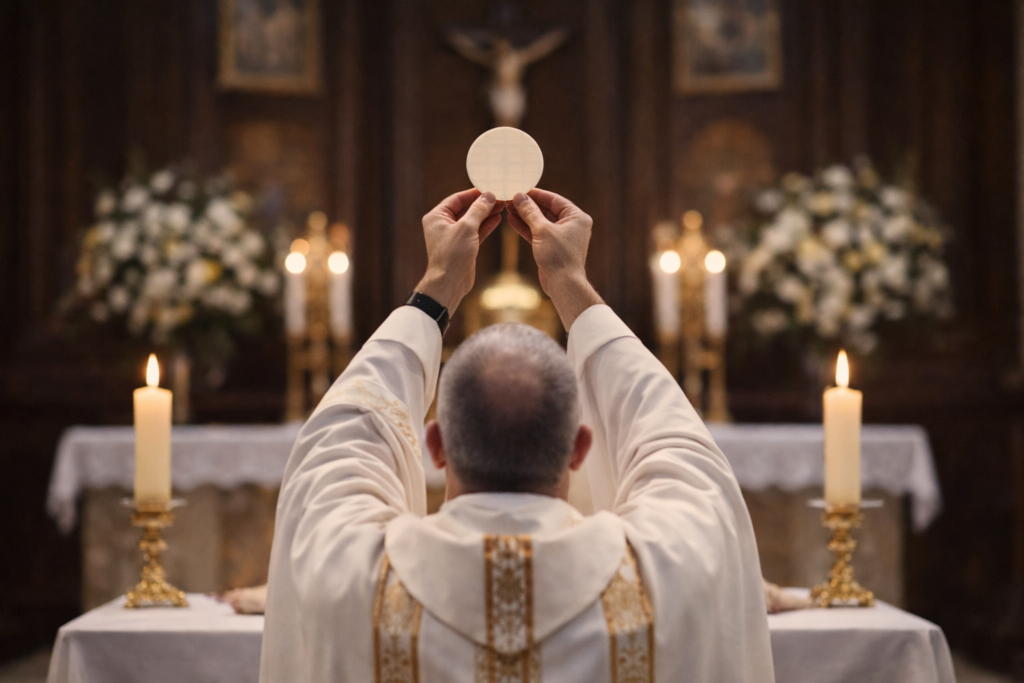
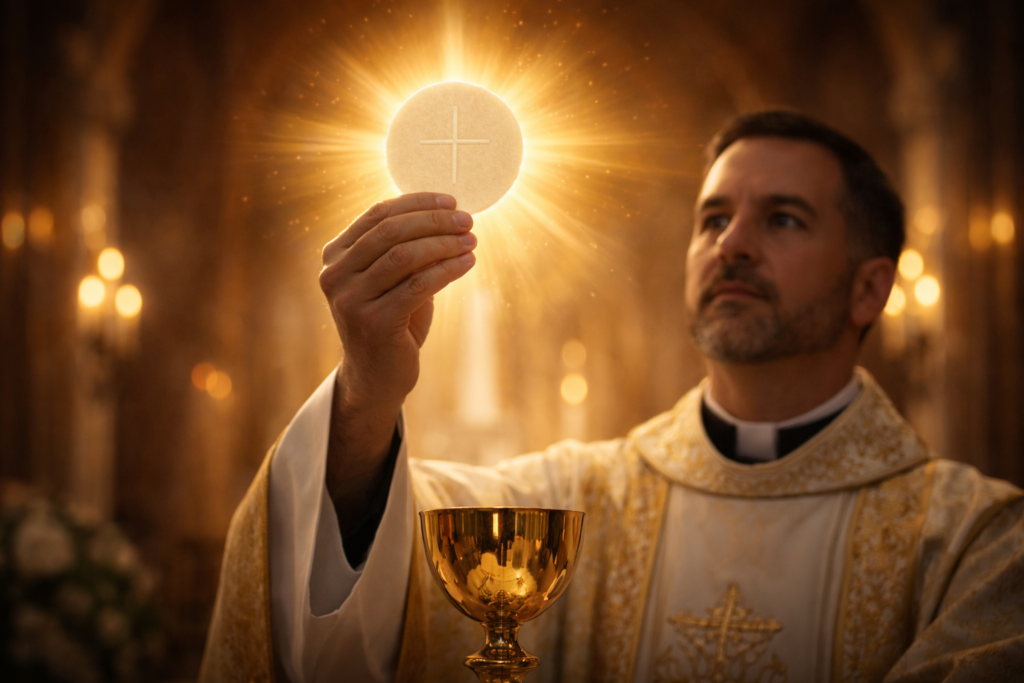
At the center of Christian life is the Eucharist, where we encounter the living presence of Jesus Christ.
Christians prepare for the Second Coming of Jesus Christ through faith and prayer.
At the center of Christian life is the Eucharist, where Catholics believe that the bread and wine truly become the Body and Blood of Christ through the mystery of Transubstantiation.
Throughout history, many believers have also been strengthened in their faith through documented Eucharistic miracles, which point to the real presence of Christ in the Eucharist.
Sources & References
Sacred Scripture
- Revised Standard Version – Catholic Edition (RSV-CE), Ignatius Press.
Key passages cited:
- Gospel of Matthew 24:6
- Gospel of Matthew 24:36
- Book of Revelation 22:20
Church Teaching
- Catechism of the Catholic Church, paragraphs 668–682, 675–677.
These sections explain:
- Christ’s reign and Second Coming
- the final trial of the Church
- the ultimate victory of Christ.