The Three Sacred Oils of the Church: Meaning, Uses, and Spiritual Power
✨ Introduction: Why Oil Matters in the Catholic Faith
The Three Sacred Oils Catholic Church uses are powerful signs of God’s blessing, healing, and consecration. Kings were anointed, prophets were chosen, and the sick were healed through the use of oil.
In the RSV-CE Bible, we read:
“Is any among you sick? Let him call for the elders of the church… anointing him with oil in the name of the Lord.”
— James 5:14 (RSV-CE)
The Catholic Church continues this sacred tradition through three holy oils, blessed each year during the Chrism Mass. These oils are not ordinary—they are visible signs of invisible grace, used in the sacraments to strengthen, heal, and consecrate the faithful.
🪔 What Are the Three Sacred Oils?
These Three Sacred Oils of the Catholic Church play a vital role in the sacramental life.
Each of these oils has deep spiritual meaning and is used in different sacraments. You can explore each one in detail below.
The Church uses three distinct oils:
- Oil of the Sick (Oleum Infirmorum)
- Oil of Catechumens (Oleum Catechumenorum)
- Sacred Chrism (Sanctum Chrisma)
Each oil serves a unique role, yet all share one mission:
👉 To bring the grace of Christ into the life of every believer
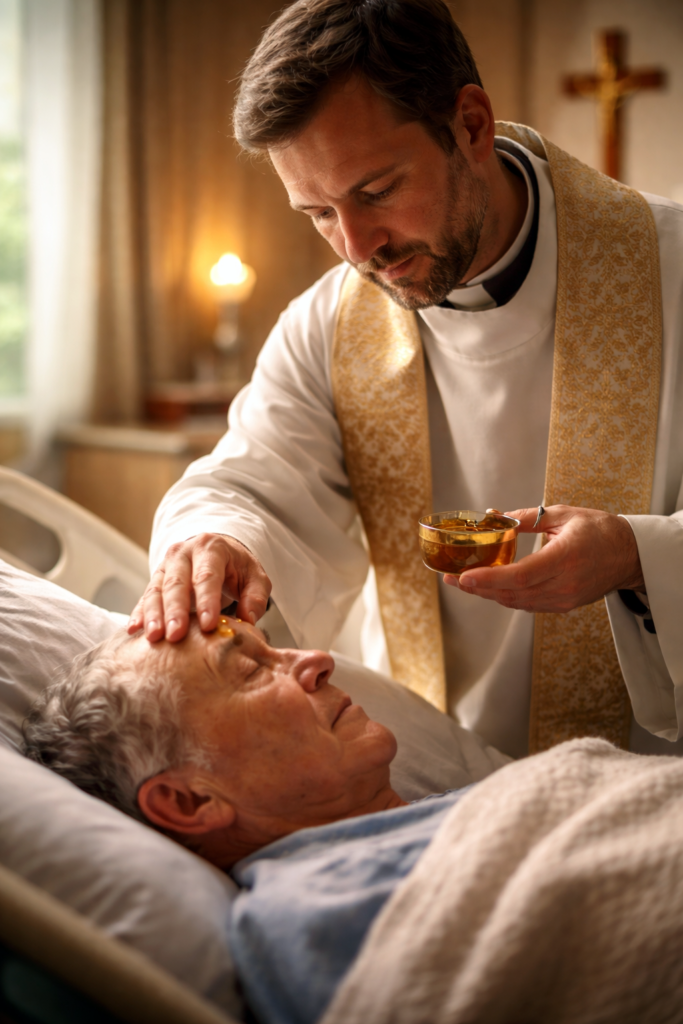
🟣 1. Oil of the Sick: Healing and Strength
📖 Biblical Foundation
“…the prayer of faith will save the sick man, and the Lord will raise him up…”
— James 5:15 (RSV-CE)
✝️ Purpose
Used in the Sacrament of the Anointing of the Sick, this oil:
- Brings spiritual healing
- Grants strength in suffering
- Forgives sins (when confession is not possible)
- Prepares the soul for union with Christ
📜 Catechism of the Catholic Church
CCC 1499 teaches that through this sacred anointing, the Church entrusts the sick to the Lord’s mercy.
⚖️ Canon Law
Canon 998 defines this sacrament as the means by which the faithful are strengthened by grace through anointing and prayer.
To understand this sacrament more deeply, read our full guide on the Anointing of the Sick (coming soon).
🟢 2. Oil of Catechumens: Strength Before Baptism
📖 Spiritual Meaning
Before Baptism, a person prepares to reject sin and embrace Christ.
✝️ Purpose
This oil:
- Strengthens against evil and temptation
- Prepares the soul for new life in Christ
- Symbolizes spiritual readiness and purification
📜 Catechism of the Catholic Church
CCC 1237 explains that this anointing signifies cleansing and strengthening.
Learn more about preparation for Baptism in our detailed guide on the Oil of Catechumens (coming soon).
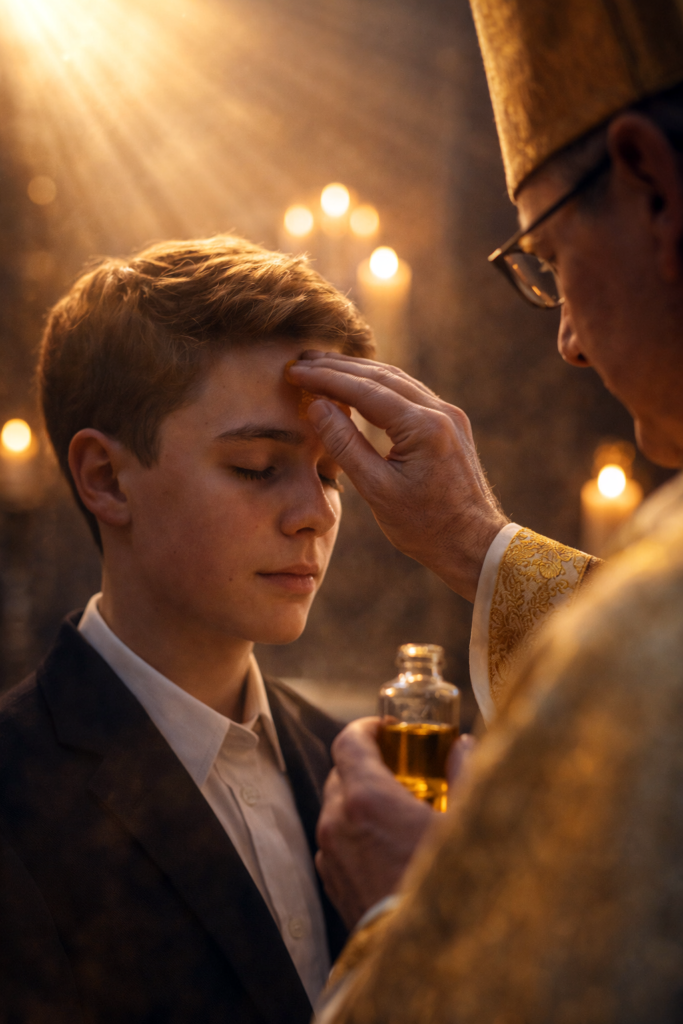
🟡 3. Sacred Chrism: Sealed by the Holy Spirit
📖 Biblical Foundation
“It is God who establishes us with you in Christ, and has commissioned us; he has put his seal upon us…”
— 2 Corinthians 1:21–22 (RSV-CE)
✝️ Purpose
Sacred Chrism is used in:
- Baptism
- Confirmation
- Holy Orders
- Consecration of altars and churches
🌿 Special Significance
Mixed with balsam (fragrance), it symbolizes the sweetness of holiness and the presence of the Holy Spirit.
📜 Catechism of the Catholic Church
CCC 1294 highlights that anointing with chrism signifies consecration and mission.
⚖️ Canon Law
Canon 880 §1 requires the use of chrism in Confirmation.
Explore the full meaning of this sacred oil in our detailed article on Sacred Chrism and Confirmation (coming soon).
🕊️ The Chrism Mass: Blessing of the Oils
The sacred oils are blessed annually during the Chrism Mass, celebrated in Holy Week and led by the bishop.
- Priests renew their promises
- Oils are consecrated and distributed to parishes
- The unity of the Church is visibly expressed
👉 As explained in official Church teaching (see Vatican.va), this Mass reflects the communion between bishop, priests, and faithful.
🔗 The Spiritual Journey of the Three Oils
Together, the oils reflect the full journey of Christian life:
- 🟢 Beginning — Oil of Catechumens (Preparation)
- 🟡 Mission — Sacred Chrism (Consecration)
- 🟣 Completion — Oil of the Sick (Healing and final grace)
👉 From Baptism to eternal life, God’s grace accompanies us through these sacred signs.
Each of these sacred oils will be explored in detail in our upcoming articles, helping you deepen your understanding of the sacraments of the Church.
❓ FAQ (Frequently Asked Questions)
1. What are the three sacred oils in the Catholic Church?
The three are Oil of the Sick, Oil of Catechumens, and Sacred Chrism, each used in different sacraments.
2. When are the sacred oils blessed?
They are blessed during the Chrism Mass in Holy Week, usually before Holy Thursday.
3. What is chrism oil made of?
It is made of olive oil mixed with balsam, symbolizing holiness and the presence of the Holy Spirit.
4. Why does the Church use oil in sacraments?
Oil is a biblical sign of healing, strength, and consecration, used since ancient times.
5. Can laypeople use these oils?
No, these oils are reserved for sacramental use by ordained ministers.
🙏 Conclusion: A Life Anointed by Grace
The three sacred oils are not just symbols—they are living signs of Christ’s presence.
Through them:
- We are strengthened before Baptism
- Sealed with the Holy Spirit
- Healed and comforted in suffering
👉 The Christian life is truly a journey marked by holy anointing and divine grace.
The Three Sacred Oils Catholic Church uses accompany believers throughout their spiritual journey.
At the heart of all sacraments is the Eucharist, the source and summit of the Christian life.
Explore more Catholic teachings, prayers, and reflections on our Way2Eucharist home page.
📚 Sources & Resources
For more trusted Catholic teachings and official documents, visit our Catholic Resources page.
📖 Sacred Scripture (RSV-CE)
- James 5:14–15
- 2 Corinthians 1:21–22
- 1 Samuel 16:13
- Mark 6:13
📜 Catechism of the Catholic Church (CCC)
- CCC 1237
- CCC 1294
- CCC 1499–1532
⚖️ Code of Canon Law
- Canon 847 §1
- Canon 880 §1
- Canon 998
🌐 Vatican & Official Church Documents
- Vatican.va
- Roman Missal — Chrism Mass
- Sacram Unctionem Infirmorum
🕊️ Liturgical Tradition
- Chrism Mass (Holy Week)
- Roman Ritual
- Apostolic Tradition
✝️ Doctrinal Fidelity Statement
All teachings presented in this article are in full fidelity to the Magisterium of the Catholic Church.