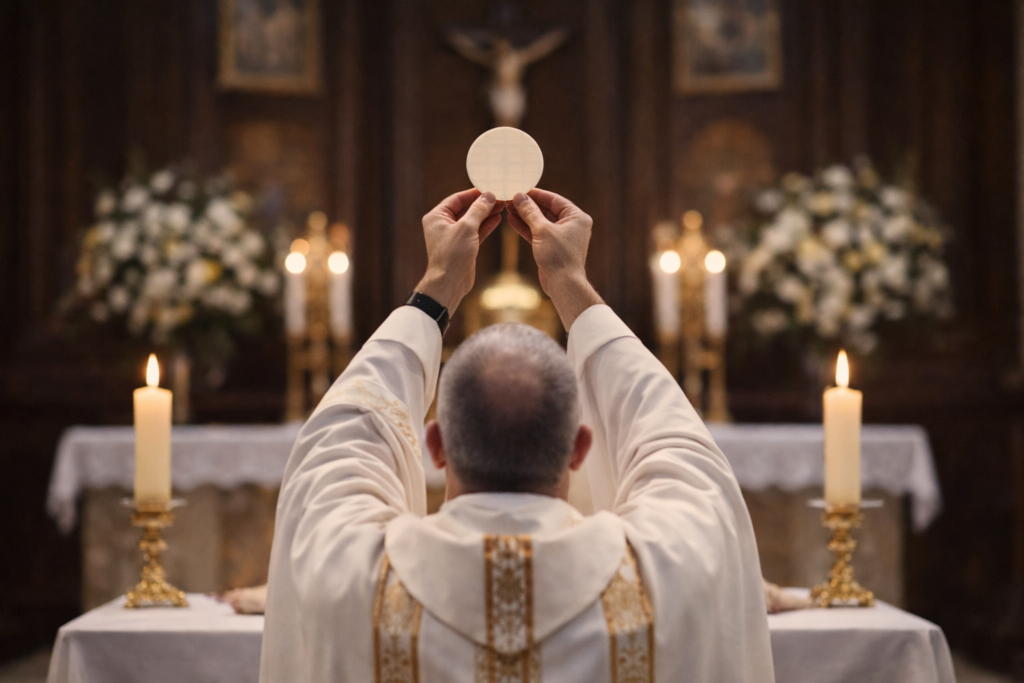
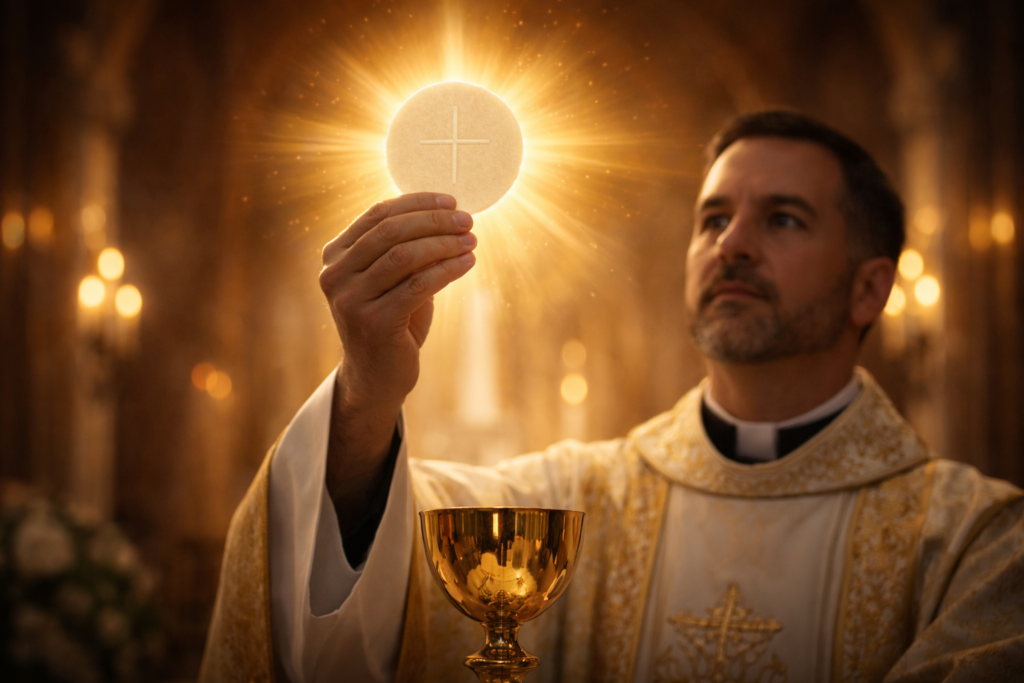
Holy Thursday: The Gift of the Eucharist, the Priesthood, and the Command to Love
Introduction
Holy Thursday, also known as Maundy Thursday, marks the beginning of the Sacred Paschal Triduum—the three holiest days in the life of the Church. On this night, the Church does not simply recall an event from the past; she enters into a mystery that continues to live and act in the present.
It is the night when Jesus, knowing that His hour had come, chose to love “to the end” (John 13:1). In a single evening, He gave the Church three inseparable gifts:
- The Holy Eucharist
- The Priesthood
- The commandment of self-giving love
These are not separate moments, but one unified act of divine love.
Holy Thursday and the Eucharist: Christ’s Presence Given Forever
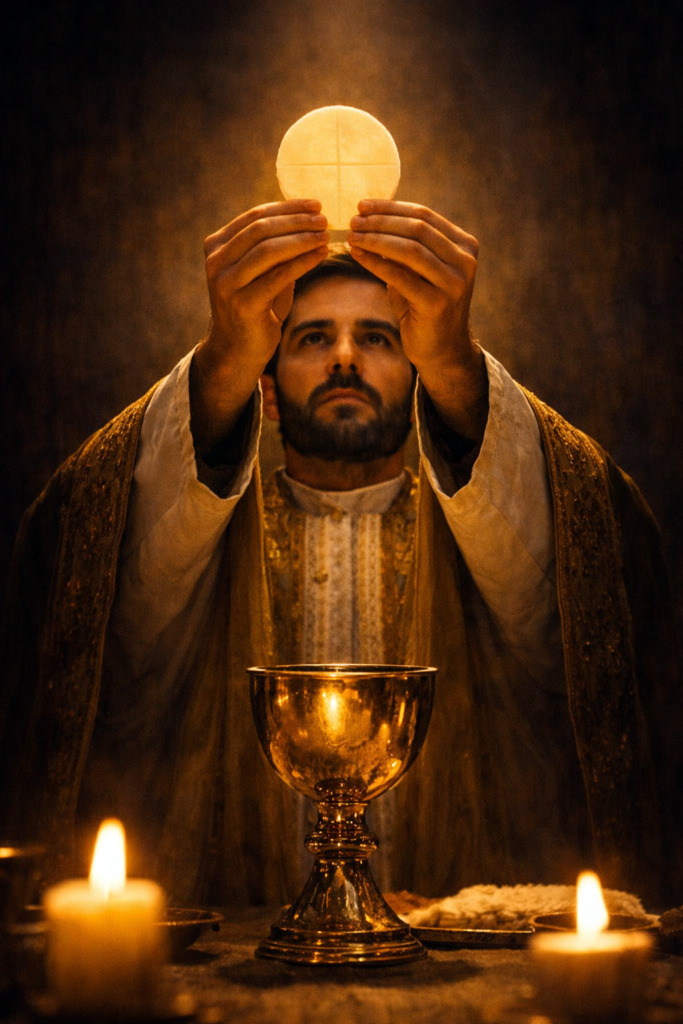
At the Last Supper, Jesus did something entirely new. He did not merely bless bread and wine—He transformed them.
“This is my body… This is my blood.” (Matthew 26:26–28)
With these words, Christ instituted the Holy Eucharist, offering Himself as real food and real drink. What took place that night was not symbolic alone, but sacramental and real. The Church, guided by the Holy Spirit, has always believed and taught that in the Eucharist, the bread and wine become the Body and Blood of Christ—a mystery known as Transubstantiation.
This means that every Mass is not a repetition, but a participation in the one sacrifice of Christ. The same Jesus who sat at table with His apostles becomes present on our altars today.
The Eucharist is therefore rightly called “the Source and Summit of the Christian life” because:
- It is the source from which all grace flows
- It is the summit toward which all worship is directed
To receive the Eucharist is to receive Christ Himself—not as an idea, but as a living reality.
The Church teaches that in the Eucharist, bread and wine become Christ Himself—a mystery explained in detail in our guide on What is Transubstantiation?
The Eucharist is truly the heart of the Church, as seen in many Eucharistic miracles around the world.
The Priesthood: A Mission Entrusted
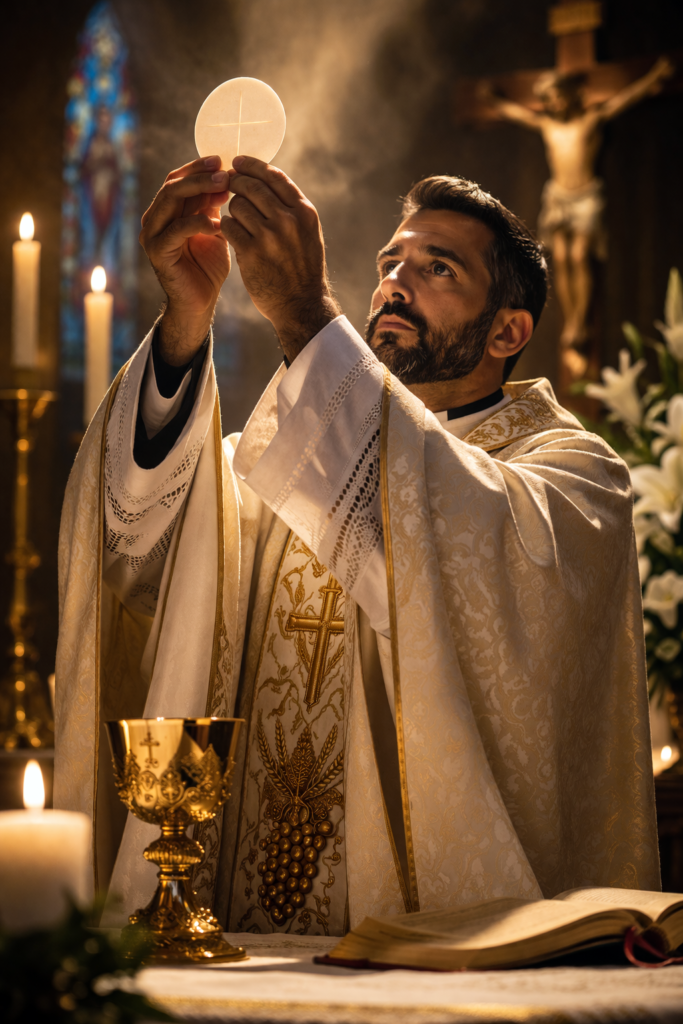
On this same night, Jesus entrusted His apostles with a sacred responsibility:
“Do this in memory of me.” (Luke 22:19)
These words are not simply a request to remember, but a command to continue His saving work. Through them, Christ established the ministerial priesthood.
The priest does not act on his own authority. In the celebration of the Mass, he acts in persona Christi—in the person of Christ. Through him, Christ continues to:
- Teach
- Sanctify
- Offer Himself in the Eucharistic sacrifice
The priesthood is therefore inseparable from the Eucharist. Without the priesthood, there is no Eucharist; without the Eucharist, the priesthood has no purpose.
Holy Thursday invites the faithful not only to understand this mystery but to pray deeply for priests—that they may remain faithful, holy, and rooted in Christ.
Through the priesthood, Christ continues His mission, especially in the Holy Mass, which remains the source and summit of the Christian life.
The Washing of the Feet: Love Made Visible
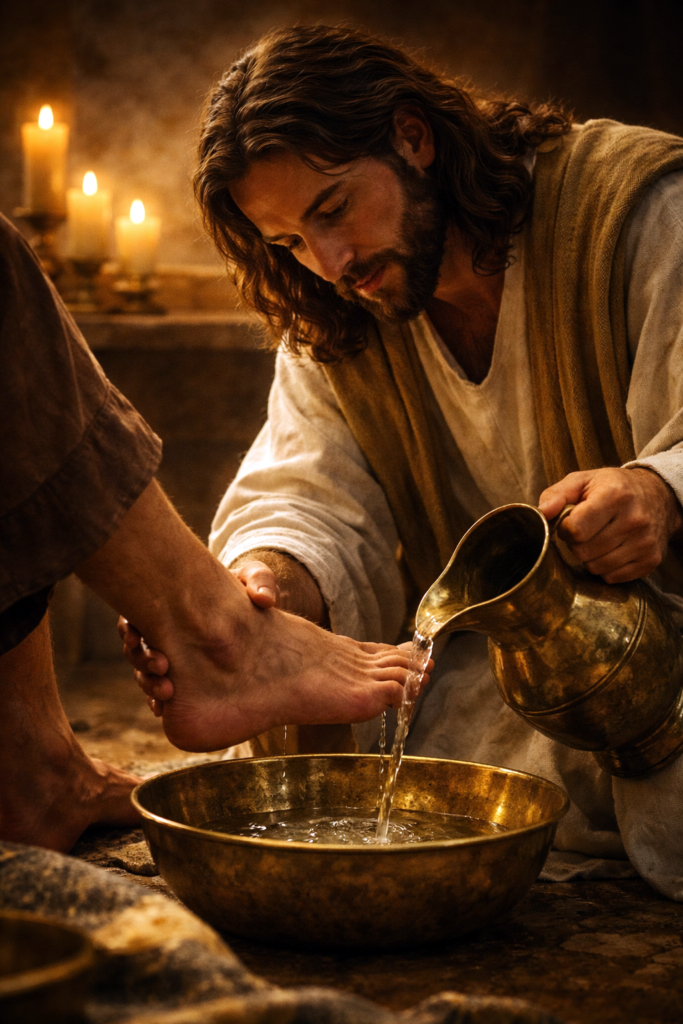
In a striking and unexpected gesture, Jesus rose from the table, took a towel, and began to wash the feet of His disciples (John 13:1–15).
This act was shocking because it reversed all human expectations. The Master became the servant. The Lord knelt before His followers.
Peter initially resisted, unable to accept such humility. But Jesus responded:
“If I do not wash you, you have no share with me.” (John 13:8)
Here, Christ reveals a profound truth:
To belong to Him is to be cleansed by Him—and to imitate Him.
The washing of the feet is not merely an example of kindness; it is a revelation of divine love. It teaches that:
- Love is not dominance, but service
- Authority in God’s Kingdom is expressed through humility
- True discipleship requires self-giving
Jesus concludes with a command:
“I have given you an example… that you also should do as I have done to you.” (John 13:15)
The Night of Watchfulness: Gethsemane and the Altar of Repose
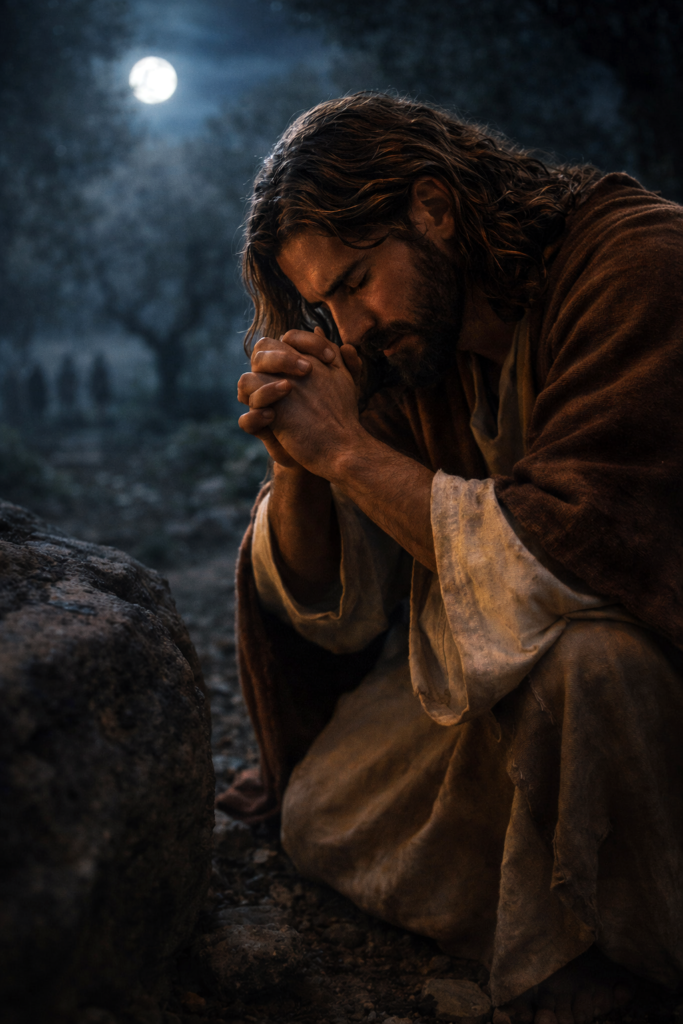
After the Last Supper, Jesus entered the Garden of Gethsemane, where He experienced deep sorrow and anguish. On Holy Thursday, this moment is reflected in the Church’s practice of Eucharistic adoration at the Altar of Repose.
The faithful are invited to remain in prayer, echoing Jesus’ question to His disciples:
“Could you not watch with me one hour?” (Matthew 26:40)
This time of silent adoration is not a ritual obligation, but a personal encounter. It is a moment to:
- Stay with Christ in His suffering
- Offer Him companionship in His loneliness
- Reflect on our own response to His love
Holy Thursday is therefore both intimate and demanding. It calls each person to remain—not to abandon Christ, but to accompany Him.
This moment invites us into deeper prayer and reflection, much like the devotion of the Way of the Cross.
The Spiritual Unity of Holy Thursday
The Eucharist, the Priesthood, and the command to love are not separate themes—they are deeply connected.
- The Eucharist is Christ giving Himself
- The Priesthood is the means by which that gift continues
- The commandment of love is how that gift is lived out
To celebrate Holy Thursday authentically means:
- To approach the Eucharist with reverence and faith
- To support and pray for priests
- To live a life of humble service
This night challenges every believer to move from ritual to relationship, from memory to transformation.
Holy Thursday (also known as Maundy Thursday) is one of the most sacred days…
FAQ (Frequently Asked Questions)
1. What is Holy Thursday in the Catholic Church?
Holy Thursday commemorates the Last Supper, when Jesus instituted the Eucharist and the priesthood and gave the commandment to love.
2. Why is it called Maundy Thursday?
The term comes from the Latin mandatum, meaning “commandment,” referring to Jesus’ command to love one another.
3. What is the significance of the washing of the feet?
It symbolizes humility, service, and the call to love others as Christ loves.
4. Why is the Eucharist central to Holy Thursday?
Because it is the night Jesus gave His Body and Blood, establishing the foundation of the Mass.
5. What is the purpose of Eucharistic adoration on Holy Thursday?
It allows the faithful to remain with Christ in prayer, recalling His agony in Gethsemane.
Conclusion
Holy Thursday is not only about what Jesus did—it is about what He continues to do.
He remains present in the Eucharist.
He continues His mission through the priesthood.
He calls each of us to love as He has loved.
This night invites a response—not just in words, but in life.
To receive Him.
To follow Him.
To become, in our own way, a reflection of His self-giving love.
To grow deeper in faith, explore authentic Church teachings and references on our Catholic Resources page
Sources & Resources
- Catechism of the Catholic Church (CCC 1322–1419) – The Holy Eucharist
- Catechism of the Catholic Church (CCC 1536–1600) – The Sacrament of Holy Orders
- The Holy Bible (RSV-Catholic Edition):
- Matthew 26:26–28
- Luke 22:14–20
- John 13:1–15
- Matthew 26:36–46
- Vatican II, Lumen Gentium (Dogmatic Constitution on the Church)
- Vatican II, Presbyterorum Ordinis (Decree on the Ministry and Life of Priests)
- Pope Benedict XVI, Sacramentum Caritatis
- Ecclesia de Eucharistia