What is Transubstantiation?
Introduction
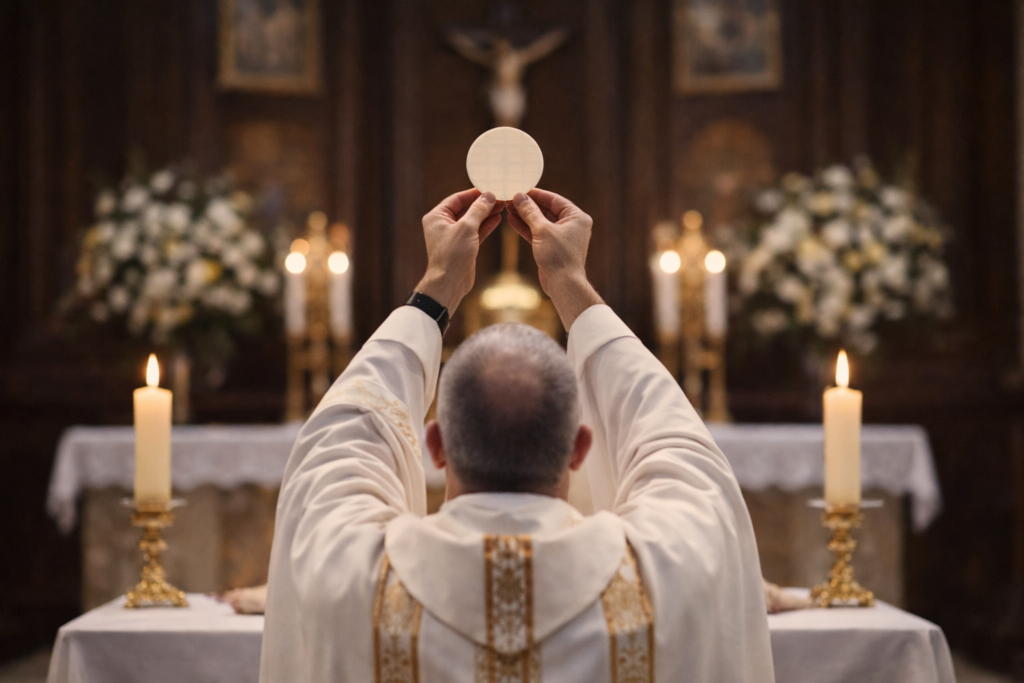
Transubstantiation is the Catholic teaching that explains how bread and wine become the Body and Blood of Jesus Christ during the Holy Eucharist.
This transformation does not change the appearance of bread and wine, but their substance becomes truly Christ Himself.
Meaning of Transubstantiation
The word “Transubstantiation” comes from:
- Trans = change
- Substance = essence
It means the inner reality of bread and wine is changed into the Body and Blood of Christ.
Though the outward form remains the same, their true nature becomes Christ.
Biblical Foundation
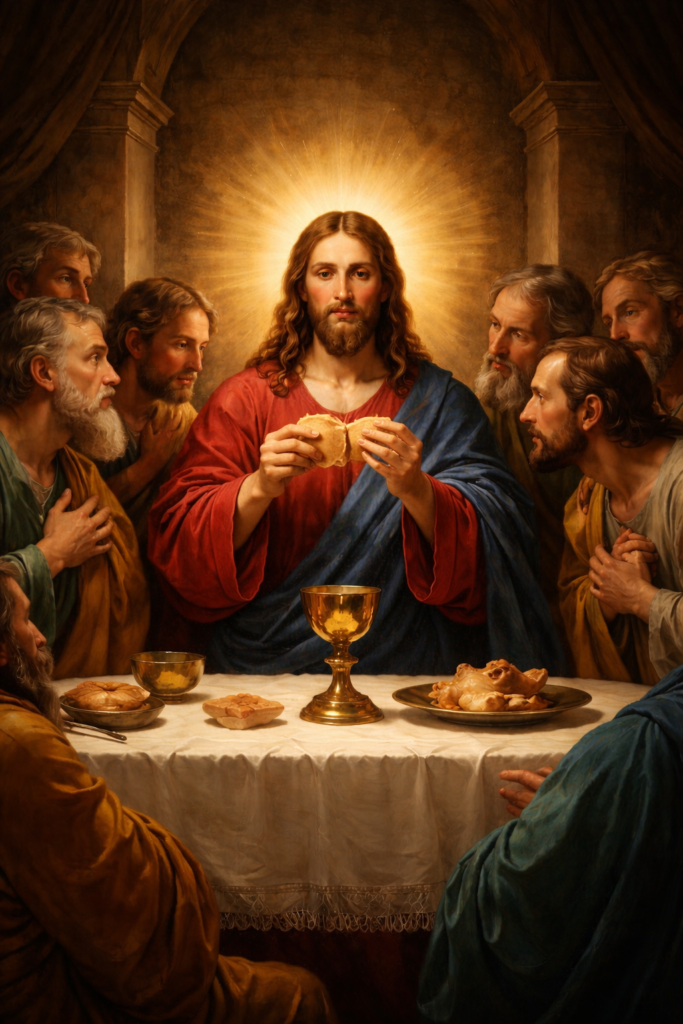
At the Last Supper, Jesus said:
“Take, eat; this is my body… Drink of it, all of you; for this is my blood of the covenant.”
Matthew 26:26–28 (RSV-CE); Luke 22:19–20 (RSV-CE); 1 Corinthians 11:23–25 (RSV-CE)
He did not say it represents His Body.
Through His words, the bread and wine become truly Him.
Jesus also teaches about this mystery in the Bread of Life discourse:
“For my flesh is food indeed, and my blood is drink indeed.”
John 6:55 (RSV-CE)
Church Teaching
The Catholic Church uses the word Transubstantiation to explain this sacred mystery.
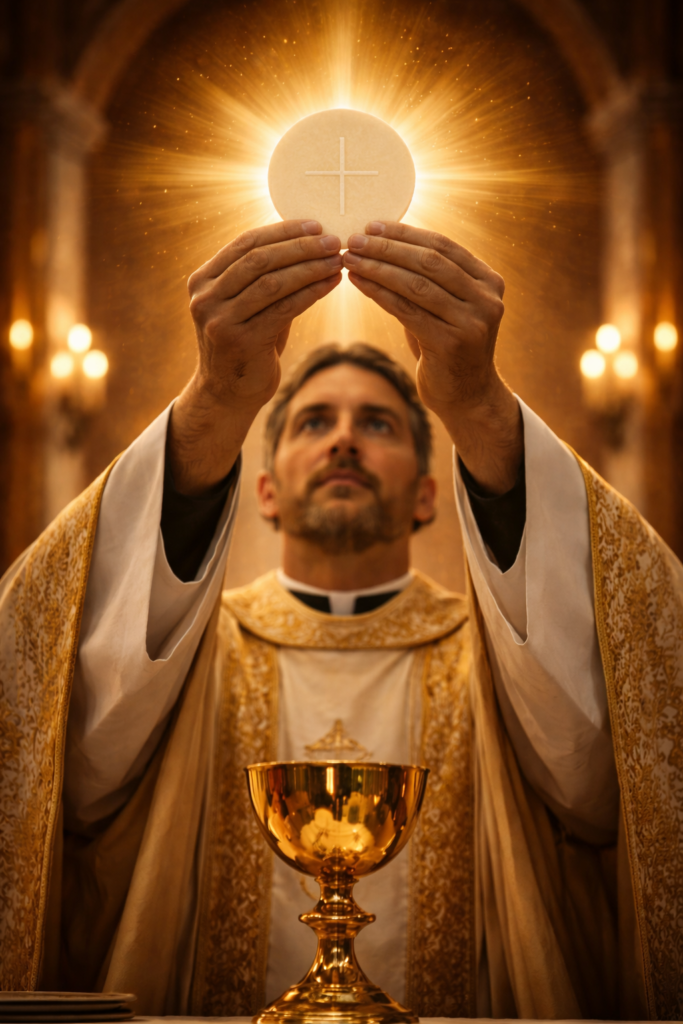
The Catechism of the Catholic Church teaches that this change happens through the power of Christ’s words spoken by the priest.
“By the consecration of the bread and wine there takes place a change of the whole substance of the bread into the substance of the Body of Christ our Lord.”
Catechism of the Catholic Church (CCC 1376)
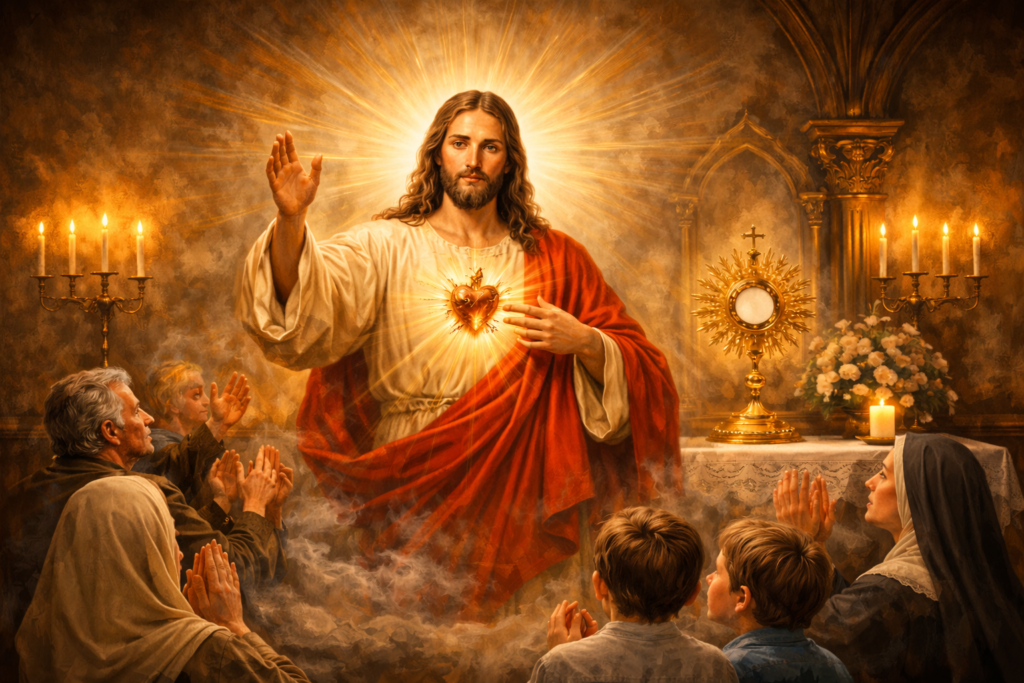
The Catechism also teaches that Christ is truly, really, and substantially present in the Eucharist.
Catechism of the Catholic Church (CCC 1374)
The Church has defended this teaching for centuries. The Council of Trent affirmed that the bread and wine truly become the Body and Blood of Christ in the Eucharist.
“Because Christ our Redeemer said that it was truly his body that he was offering under the species of bread… the Church has always believed that the bread and wine become the Body and Blood of Christ.”
Council of Trent, Session XIII
St. John Paul II also emphasized the central place of the Eucharist in the life of the Church:
“The Church draws her life from the Eucharist.”
Ecclesia de Eucharistia 1
The Catechism of the Catholic Church explains this sacred mystery clearly.
Why It Matters
Understanding Transubstantiation helps us see:
The Eucharist is not symbolic.
It is a real encounter with Christ.
This deepens reverence and faith in the Holy Eucharist.
Reflection
Transubstantiation reveals the depth of God’s love.
Jesus gives Himself completely to nourish believers.
This teaching invites us to receive the Eucharist with faith and devotion.
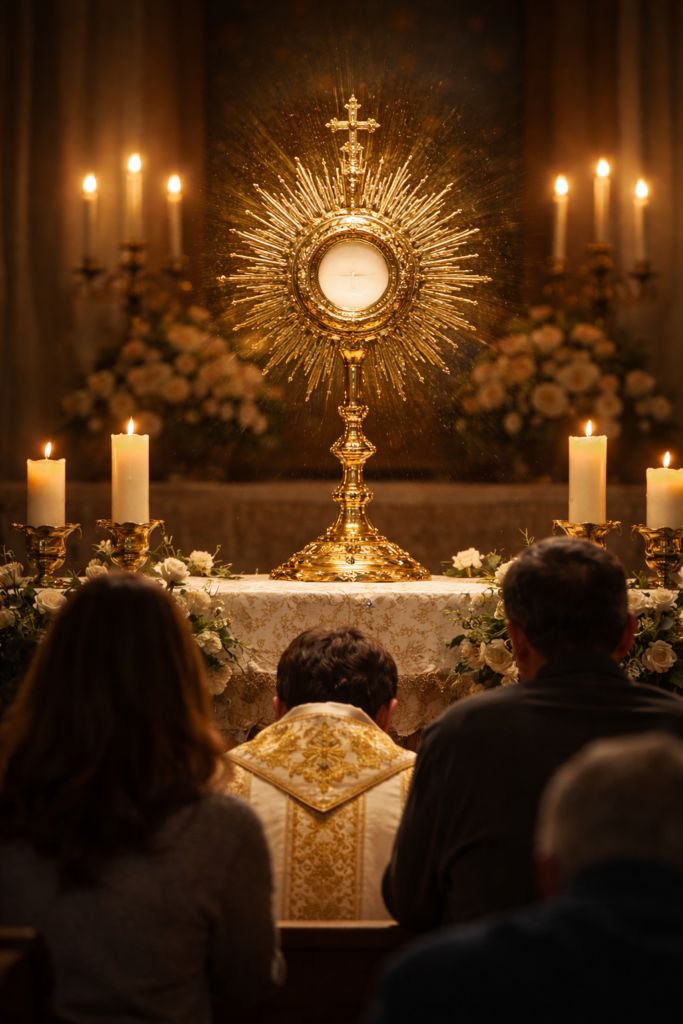
This teaching is part of our Faith Teaching reflections.
To understand the deeper mystery of the Eucharist, you may also read about the Real Presence in the Eucharist.
Lent begins with repentance, and Ash Wednesday invites us to prepare our hearts for the Eucharistic mystery.
Christians also look forward to the return of Christ at the end of time. You can read more about this in our article “Are We Living in the End Times?”
Sources and References
The Holy Bible (RSV-CE)
Matthew 26:26–28; Luke 22:19–20; John 6:55; 1 Corinthians 11:23–25
Catechism of the Catholic Church (CCC 1374, 1376)
Ecclesia de Eucharistia 1 — St. John Paul II
Council of Trent, Session XIII